

A simple guide to safe loft storage, boarding, insulation, and knowing what your space can handle
Yes, that old box of decorations seems to sit in your loft safely, but what about all your camping equipment? Or boxes full of books and keepsakes?
One of the most common questions we are asked is “How much can my loft safely hold?”. It’s a good question – no-one wants to be woken up in the night by a load of plaster and Christmas baubles coming down on their head.
The good news is that most lofts can handle a lot of storage, as long as the flooring is done properly and you’re sensible about what goes up there – and how you get it up there in the first place. Of course, no two lofts are the same, so it really does depend on the exact nature of your space, but here’s a little advice from our experts to help you:
What’s holding it all up?
It all starts with your joists – the timber beams running across your loft floor – and it’s easy to see why loading them up can feel like a worry. After all, they’re also the ceiling of the room below. However, they’re rarely the actual weak point when it comes to storage. What’s really important is what you lay on top of them to turn that empty loft space into usable storage, which is where boarding comes in.
Why boards shouldn’t go straight onto the joists
Your joists aren’t just load-bearing beams, they’re also where your insulation goes and, in order to do its job properly, it needs to sit at a certain depth. Fixing loft boards straight onto the joists squashes it flat, and squashed insulation lets heat escape from your lovely, cosy rooms below.
The answer is a raised flooring system.
It lifts the boards clear of the insulation, leaving a gap so the insulation keeps its full depth and carries on working. Loft insulation can cut energy bills by up to around 20%, so protecting it really is worth your while. You still get a level, stable surface to use for storage, but your home’s thermal performance isn’t affected.
So, how much can it actually hold?
A raised loft floor is built for light domestic storage – not a home gym, and definitely not an extra room to live in. A sensible guide is a maximum of around 25kg per square metre, spread evenly across the boarded area.
Can you safely walk in the loft?
Yes, provided the ladder itself is up to the job. A good loft ladder should be independently tested for safety – the ones we fit are rated to carry up to 150kg, which is more than enough for an adult to carry up a big box, and it ensures there are no wobbles or dangerous moments while they’re doing it.
A raised floor is then the perfect surface to stow boxes on quickly and safely.
What’s safe to store in my loft?
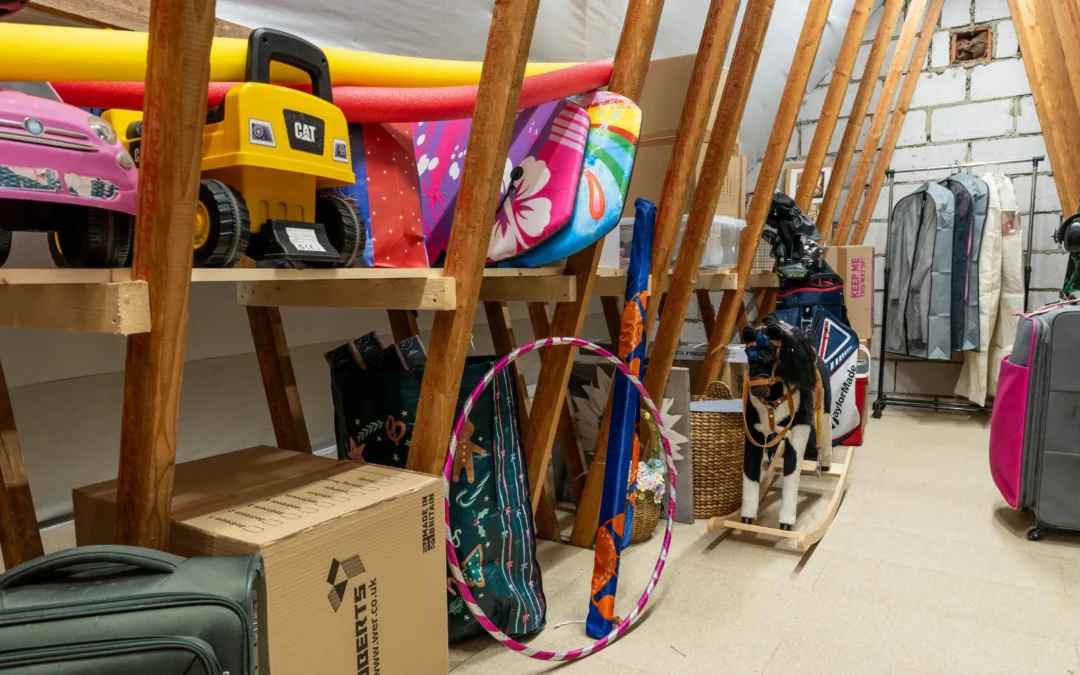
As long as the boarding is sound, and the access is safe and easy, then plenty. Suitcases you only need twice a year, seasonal decorations, camping gear, keepsakes and photo albums, the children’s things they’ve grown out of but nobody can quite part with – all the lightweight bits and bobs that clutter up the cupboards downstairs. If it’s light and rarely disturbed, the loft’s the perfect home for it.
Every loft is different
No two lofts are quite the same, of course. Structure, the age of the property and the way it was built all vary, so you should always seek a professional assessment before adding boarding or increasing storage in your loft. We check the space before anything is fitted, and if there’s ever a concern about whether or not the structure suits what you have in mind, we’ll talk it through with you before any work begins.
Getting it right really comes down to two things: the right flooring, and a bit of common sense about what goes up there. Get both sorted, and that empty space above your head becomes some of the most useful storage in the house.
If you’d like a straight answer about your own loft, what it can take, and whether the structure’s suitable, we’re here to help Find a local installer in your area for a free, no-obligation survey and quotation, or call free on 0800 909 8967. There’s no pressure either way, just honest advice on what’s possible.
Frequently asked questions
Is it safe to store things in my loft? Yes. Most lofts can safely take light, everyday storage once a proper raised floor is fitted and the weight is spread out rather than piled into one spot. Heavier items, or anything that really needs a proper room of their own, are a different matter, and worth getting professional advice on.
How much weight can my loft floor hold? A raised loft floor is designed for around 25kg per square metre of evenly distributed storage, as a rough guide. It’s built for light domestic items, not heavy-duty loads or living space.
Can you put loft boards straight onto the joists? It’s best not to. Boarding straight onto the joists compresses the insulation underneath, which reduces its performance and lets heat escape. A raised flooring system keeps the boards clear of the insulation so it carries on doing its job.
Can you walk safely in a boarded loft? Yes, as long as the ladder is up to the job. A good loft ladder should be independently tested for safety. Ours are rated to carry up to 150kg and a raised floor is built for the normal coming and going of storing and fetching household items.
What shouldn’t you store in a loft? Keep heavy or bulky loads to a minimum, and don’t treat the space as an extra room. If you’re planning heavy storage or a loft conversion, a storage loft and a habitable room are built to different standards so it’s worth speaking to a structural engineer or qualified building professional first.

